Embracing a Dairy-Free Lifestyle: Your Essential Guide for Newbies
The day I received my milk allergy diagnosis is etched permanently in my memory. After my doctor delivered the news and handed me a comprehensive list – a truly daunting one – of foods I could no longer consume, I sat there, overwhelmed, and cried. That list included staples like ice cream, cheese, butter, sour cream, and ranch dressing, alongside less obvious ingredients such as whey, casein, lactoglobulin, and nonfat dried milk. My mind reeled: How could I possibly navigate life without milk, cheese, cream cheese, cheesecake (my absolute favorite dessert), or coffee ice cream (another cherished treat)? The pity party commenced with full force! In hindsight, I desperately wished I had access to a practical guide like “10 Tips for Those New to Eating Dairy-Free” to accompany that restrictive “no-no” list.

This pivotal moment occurred over two decades ago, following six agonizing months of a painful, debilitating, and exhausting sinus infection that stubbornly resisted every treatment I threw at it – countless horse-pill-sized antibiotics, an arsenal of nasal sprays, and endless steam showers.
SPOILER ALERT: The decision to quit dairy cold turkey profoundly transformed my health in three significant ways: 1) My persistent six-month sinus infection finally cleared up after about a month of being dairy-free, offering immense relief. 2) My recurring sinus infections, which had plagued me at an average of three times per year, virtually disappeared (I’ve only experienced three in over 20 years since making the switch!). 3) My occasional, debilitating migraine headaches completely ceased. While a tiny accidental exposure to cow’s milk won’t send me to the emergency room, rest assured, I avoid it with absolute vigilance! You truly don’t comprehend how unwell you’ve been feeling until you finally experience the profound relief of feeling truly well. I would never trade that feeling for all the real cheesecake or coffee ice cream in the world!
Now, I’m eager to pay it forward by sharing this comprehensive list of tips for embracing a dairy-free lifestyle. This guide is designed to assist anyone newly navigating a milk allergy, milk sensitivity, or lactose intolerance (or parents managing a child with these conditions). It’s also invaluable for those who have long suspected issues with dairy and are finally ready to commit to its elimination. Furthermore, these insights are equally beneficial for individuals choosing a dairy-free diet for other health-conscious or lifestyle reasons – and as I’ve learned, there are numerous compelling arguments for doing so.
My Personal Journey and Essential Tips for Starting Your Dairy-Free Lifestyle
Embarking on a dairy-free journey can feel overwhelming at first, but with the right strategies and mindset, it becomes an empowering path to better health. Here are my top tips to guide you.
1) Embrace the “Cold Turkey” Method and Recall Your Discomfort
Had my doctor merely suggested eliminating dairy, I question how steadfast my commitment would have been. I likely would have attempted a gradual phase-out, inevitably leading to a relapse that would perpetuate my misery. Fortunately, my suffering was so intense, and a visible, itchy welt served as undeniable “proof” that going dairy-free was my necessary solution. I left that doctor’s office, cut out dairy entirely, and never looked back.
In contrast, my daughter was born with lactose intolerance, primarily affecting her digestive tract. She followed a dairy-free diet for her early years but eventually seemed to tolerate small amounts of cheese and a few bites of ice cream. However, when she went to college, she consumed significantly more dairy. This not only caused digestive discomfort but eventually triggered hives as well. Ultimately, she fully eliminated dairy, and her quality of life improved dramatically.
Remembering the discomfort and negative symptoms you experienced due to dairy can be a powerful motivator to stay committed to your new diet. This recollection will help you maintain your resolve during challenging moments.
2) Allow for a Pity Party, Then Develop a Strategic Plan

It’s perfectly acceptable to grant yourself a day (or even just an hour) to lament what you perceive to be lost. Acknowledge the foods and experiences you’ll be missing. Adjusting to new shopping habits, cooking methods, dining choices, and restaurant ordering protocols is no simple feat – literally, as many traditional cakes in restaurants will now be off-limits. Beyond my initial post-diagnosis pity party, I vividly recall a second one: it was my first holiday season after the diagnosis. I was shopping at the mall, grew hungry, and headed to the food court. As I scanned the options, a disheartening realization washed over me: “No, can’t have that; no, there’s nonfat dry milk in those buns; no, there’s milk in the chicken strip’s batter…” The list went on. I sank onto a chair and wept. This was a public yet quiet, hungry pity party for one.
The next time I visited the mall, I prepared thoroughly. I researched safe eating options beforehand, packed a dairy-free snack, and arrived knowing exactly what I could confidently order at the food court. At home, I diligently focused on meal planning. I sifted through my existing recipes and cookbooks, realizing the majority of my favorite dishes and desserts were no longer viable (I skipped the pity party this time). I meticulously earmarked and saved the recipes that were inherently dairy-free, alongside those I felt I could successfully adapt into dairy-free versions.
My next mission was to scour the library and bookstore (this was back in 1996!) for any dairy-free cookbooks. I managed to find a couple of vegetarian cookbooks and precisely ONE – yes, you read that right, only one – dedicated dairy-free cookbook. It was authored by Jane Zukin, an early pioneer in the field of lactose and milk allergy education and recipe development, and I remain eternally grateful for her groundbreaking work!
3) Prioritize Finding 3 Essential Dairy-Free Foods or Recipes
Your immediate task should be to identify at least one item from each of these crucial categories as quickly as possible:
1) A Portable and Reasonably Healthy Dairy-Free Snack: This could be a simple apple, an energy bar, a homemade muffin, or my personal favorite, whole raw cashews. The golden rule is to always have something safe and satisfying with you that you CAN eat. We want to prevent you from experiencing the kind of “hangry” food court meltdown I endured!
2) A Dairy-Free Comfort Food Recipe: Early in my journey, I discovered an “accidentally” dairy-free tuna tetrazzini recipe on the back of a mayonnaise jar. I adapted it and prepared it frequently. While not the pinnacle of health, my children adored it, and I desperately craved creamy comfort food! You will too. Currently, my go-to comfort food is my quick and easy “Cheesy” Tomato Pasta Bowl. Finding a comfort food helps ease the transition and provides a sense of normalcy.
3) A Dairy-Free Dessert: Jane Zukin’s “Best Ever Brownies” from her Dairy-Free Cookbook were an absolute lifeline for me in the early days. That recipe remains a cherished family favorite today and is even a hit with my daughter’s college roommates. The key here is to arm yourself with a sweet treat you can enjoy, because in the beginning, it will feel as though almost every dessert is off-limits, and you’ll likely crave sweets more than usual. This challenge is especially pronounced when dining out, where your options might be limited to fruit, sorbet (not sherbet, which often contains dairy!), or, if you’re lucky enough to be at a Mexican restaurant, sopapillas. I developed a genuine fondness for sopapillas simply because they were a safe and delicious option!
4) Allocate Extra Time at the Grocery Store for Your New Hobby: Label Reading
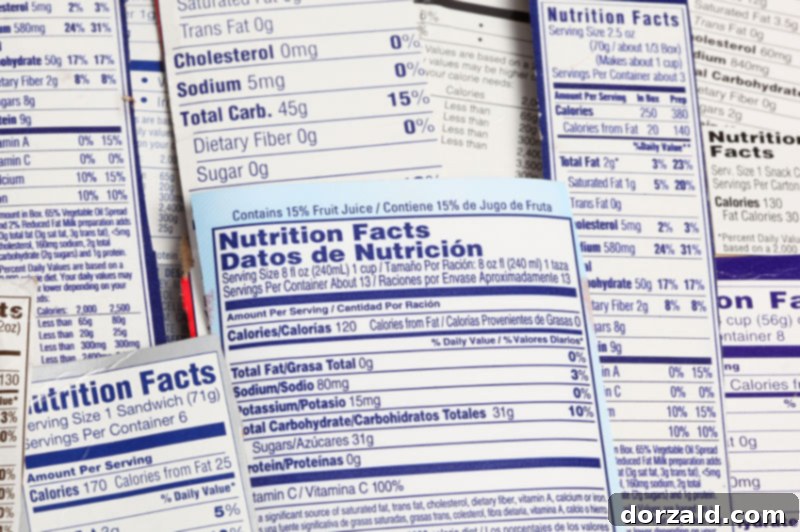
My very first grocery store trip after my diagnosis stretched for over three arduous hours! Armed with my extensive “no-no” list (which closely resembled this helpful dairy ingredient list), I meticulously scrutinized the label of every single item. You will need to do the same, so consciously set aside ample extra time for your initial grocery runs. If you have children, try to arrange for someone to watch them during these first few trips, if possible, to allow for undisturbed focus.
Some food packaging prominently displays “dairy-free” on it, making identification easier. Other dairy-free items might carry a “pareve” label, usually in small print on the front. “Pareve” is a kosher designation indicating the item contains no dairy or meat, meaning it’s safe to mix with either to maintain kosher standards. However, it’s crucial to note that a product can be labeled pareve even if it contains a minuscule amount of milk protein. For individuals with a severe milk allergy, this small quantity can still trigger an allergic reaction, so “pareve” isn’t a universally complete dairy-free green light. Always, without exception, read the full ingredient labels.
If a product is labeled “vegan,” it will definitively contain no dairy, meat, or egg products, making it a reliable choice for a fully dairy-free diet. Conversely, if an item is merely labeled “lactose-free,” it signifies only the absence of lactose – which is just one component of milk. These products are suitable for those with lactose intolerance but are insufficient for individuals with a dairy allergy, suspected dairy allergy, or anyone striving for a completely dairy-free lifestyle.
5) Cultivate a Repertoire of New Favorite Foods
Before transitioning to a dairy-free diet, my response to “Would you like some grated cheese on that?” was invariably “yes,” followed by “and then more yes!” Cheesecake was my ultimate dessert, I savored a glass of milk with every meal, and my coffee was always generously loaded with milk or cream. All the casseroles and party snack recipes I took immense pride in preparing were brimming with cheese, sour cream, cream cheese, or a combination of all three. It’s hardly surprising that I was so afflicted with chronic sinus issues!
I was, without a doubt, a full-on, hardcore lover of all things milk! So, when I advise you to “find new favorite foods,” I speak from profound personal understanding that this can be incredibly challenging. But I am here to assure you, dear friends, that it is absolutely achievable. This now dairy-free woman genuinely loves bread without butter (seriously, I can truly taste the BREAD now), perfectly oven-roasted cauliflower, pan-roasted asparagus, and even pizza without cheese (think of it as flavorful breadsticks with toppings, dipped in marinara sauce). I’ve discovered a love for dairy-free gelato and sweet dairy-free cornbread. How many of these did I genuinely enjoy before my diagnosis? Only the cornbread. Your palate will adapt and evolve, opening up a world of new culinary delights.
6) Investigate the Broad Health Benefits of Going Dairy-Free

If you’re opting for a dairy-free lifestyle by choice, you likely already possess a good understanding of the numerous health advantages it can offer. However, if you, like me, are making the switch reluctantly and with significant resistance, dedicating time to research the scientific and anecdotal benefits will be immensely helpful in sustaining your commitment. For a start, milk is consistently ranked among the most common food allergens globally. Furthermore, approximately 65 percent of the human population experiences a reduced ability to digest lactose after infancy, a condition that often worsens as we age. Beyond allergies and intolerances, many people report improvements in skin clarity, reduced inflammation, better digestion, and even enhanced energy levels after eliminating dairy. Understanding these potential positive outcomes can transform a perceived sacrifice into a proactive health choice, bolstering your resolve during moments of doubt.
7) Discover Your New Favorite Dairy-Free Brands

Finding new favorite dairy-free brands will undoubtedly involve a process of trial and error, but it’s a worthwhile endeavor. Interestingly, one “real” dairy item I never truly enjoyed was yogurt, yet I’ve developed a fondness for dairy-free yogurts (go figure!). My daughter shares this sentiment, though we often prefer different brands of dairy-free yogurt. I highlight this because you might try a specific brand or type and find it unappealing; don’t be discouraged – simply try another. Taste preferences are highly individual, and one brand’s formulation won’t necessarily resonate with everyone. Furthermore, maintain an open mind, as the market for plant-based alternatives is continually evolving with innovative new products emerging all the time. For instance, the relatively new Bailey’s almond milk liqueur, pictured above, exemplifies the exciting advancements in dairy-free options.
8) Stock Your Pantry with Essential Dairy-Free Cooking Staples
Note: This post is not sponsored in any way by the brands mentioned below. Another note: If you’re one of these brands and wish to change that, feel free to contact me. 😉
Milk Substitutes: Today, we are fortunate to have a vast array of options. You can choose from almond milk, coconut milk, soy milk, cashew milk, and rice milk (which was the sole option available over 20 years ago and remains my least favorite). If you’re using milk for cereal or baking, a vanilla-flavored variety might be appealing. Some individuals immediately enjoy the taste of milk substitutes. For others, like myself, it’s an acquired taste. If one type or brand doesn’t appeal, simply try another. Initially, I only tolerated “fake” milk with chocolate cereal, using the absolute minimum amount possible. Now, I generously pour almond milk into my cereal bowl and can enjoy a full glass of it with a brownie, much like I used to drink regular milk. NOTE: Avoid using vanilla-flavored milk for savory cooking (dishes like eggs, casseroles, and sauces taste quite strange with vanilla; I learned this the hard way so you don’t have to – LOL!).
Dairy-Free Cheese: This incredible option did not exist when I first transitioned to dairy-free, and it is now my absolute favorite dairy-free product! I’ve experimented with all the dairy-free “cheese” options available in my area, and I consistently find the Daiya brand cheese shreds to be the best (as you’ll notice in many of my recipes).
Butter Substitutes: Vegan “butter” brands (such as Earth Balance buttery sticks), coconut oil, canola oil, grapeseed oil, and margarine (my least preferred option) will become your new best friends for baking and cooking.
Dairy-Free Bread Crumbs: A surprising number of traditional bread crumbs contain hidden dairy ingredients like cheese or nonfat dry milk. If you enjoy making meatballs, meatloaf, homemade chicken strips, or other breaded dishes, ensure you stock up on dairy-free varieties. My preferred dairy-free bread crumbs are the Edward and Sons Organic Breadcrumbs (I sometimes find these in grocery stores, but I often buy them in bulk on Amazon to ensure a steady supply). Ian’s Natural Foods also produces an excellent gluten-free, dairy-free, soy-free, and nut-free breadcrumb option that I highly recommend.
Canned Coconut Milk: This ingredient will quickly become indispensable in your dairy-free kitchen (unless you have a coconut allergy). I easily find it in the Asian food section of any grocery store. It’s incredibly versatile; I use it to create homemade whipped cream and incorporate it extensively into many of my cooking recipes.
Yogurt: The availability of dairy-free yogurt options varies significantly by store. Some stores offer very few, while others boast a wide selection. In well-stocked stores, you can typically find milk-free yogurts crafted from coconut, soy, or almond milks. If your first attempt with a particular brand or base isn’t enjoyable, I strongly encourage you to try another. The taste profiles among dairy-free yogurts can differ quite dramatically.
Ice Cream: Similar to yogurt, a vast assortment of dairy-free ice creams is now available in many stores. Finding a favorite is a highly subjective experience, so indulge in trying several brands and bases (almond, coconut, oat, soy, cashew) to discover your personal preference.
Cream Cheese and Sour Cream: Unfortunately, I haven’t yet found a commercially prepared substitute for cream cheese or sour cream that fully satisfies my taste buds. While homemade versions of sour cream tend to be closer to the real thing than store-bought options, I’m still actively working on perfecting a dairy-free cream cheese alternative… *sigh* (that was a quick, one-second pity party – ha!).
Surprisingly Dairy-Free Items: Here’s a list of items that, against common assumption, often do not contain dairy: phyllo dough, puff pastry dough, marshmallows, mayonnaise, creamed corn, and Junior Mints (though always double-check labels just to be safe!). While none of these will win awards for being the healthiest additions to your shopping list, one or all of them can offer comfort and a sense of normalcy during your transition. I’d love to hear any other surprising dairy-free finds you’ve discovered (feel free to share in the comments below)!
9) Actively Be Your Own Advocate

If your child had a food allergy, you would undoubtedly be proactive in highlighting it at restaurants, family gatherings, friends’ homes, school, and other social settings. The critical question is: Will you extend that same level of care and advocacy to yourself?
Please grant yourself that identical measure of love, protection, and assertiveness. It can feel awkward or challenging to be perceived as “the difficult one” when placing an order at a restaurant. However, trust me: the wait staff, chefs, and managers much prefer to be fully informed about your allergy or intolerance upfront, rather than having to send a dish back to the kitchen because you felt shy, wanted to avoid inconvenience, or simply forgot to mention it. Your friends and family also genuinely do not want you to feel unwell or get sick, so speak up confidently and clearly when visiting their homes or attending social events. Effective communication is key to your safety and comfort.
This has been a continuous learning curve for me. Recently, I chose an Asian restaurant at an airport specifically to avoid dairy. To be safe, I carefully read the menu’s description and ingredient list for my chosen meal. With no dairy components explicitly listed (and given it was an Asian restaurant, where dairy is less common!), I mistakenly assumed I didn’t need to explicitly inform my server about my dairy allergy. My meal arrived with inexplicable white chunks – which turned out to be blue cheese! Who, in their right mind, would think to add a significant amount of blue cheese to an Asian broccoli chicken dish without mentioning it in the menu description? Lesson learned (yet again): always ask, never assume, and absolutely do not worry about being “a pain” when it comes to your health!
10) Celebrate the Silver Linings and Embrace New Discoveries
Transitioning to a dairy-free lifestyle is undeniably challenging at first, but I promise you that the benefits far outweigh the difficulties, and it undeniably becomes easier over time. Adopting a dairy-free diet will empower you to feel significantly better, alleviating symptoms and improving overall well-being. Moreover, this journey will lead you to discover an exciting array of new foods, flavors, and recipes that you will come to love, broadening your culinary horizons in unexpected ways.
I genuinely encourage you to share your experiences: what challenges have you faced in going dairy-free, what do you miss the most, and what exciting new discoveries have you made? Please feel free to leave any questions or comments in the section below. Your insights and questions can greatly help others navigating this path.
You can also conveniently pin or save these 10 tips for those new to eating dairy-free for future reference. Thank you for reading, and I wish you the very best on your dairy-free journey!
Disclosure: This post contains an Amazon affiliate link. If you click and purchase something through it, the cost remains the same for you, and I earn a small fee, which helps keep this blog running. 🙂