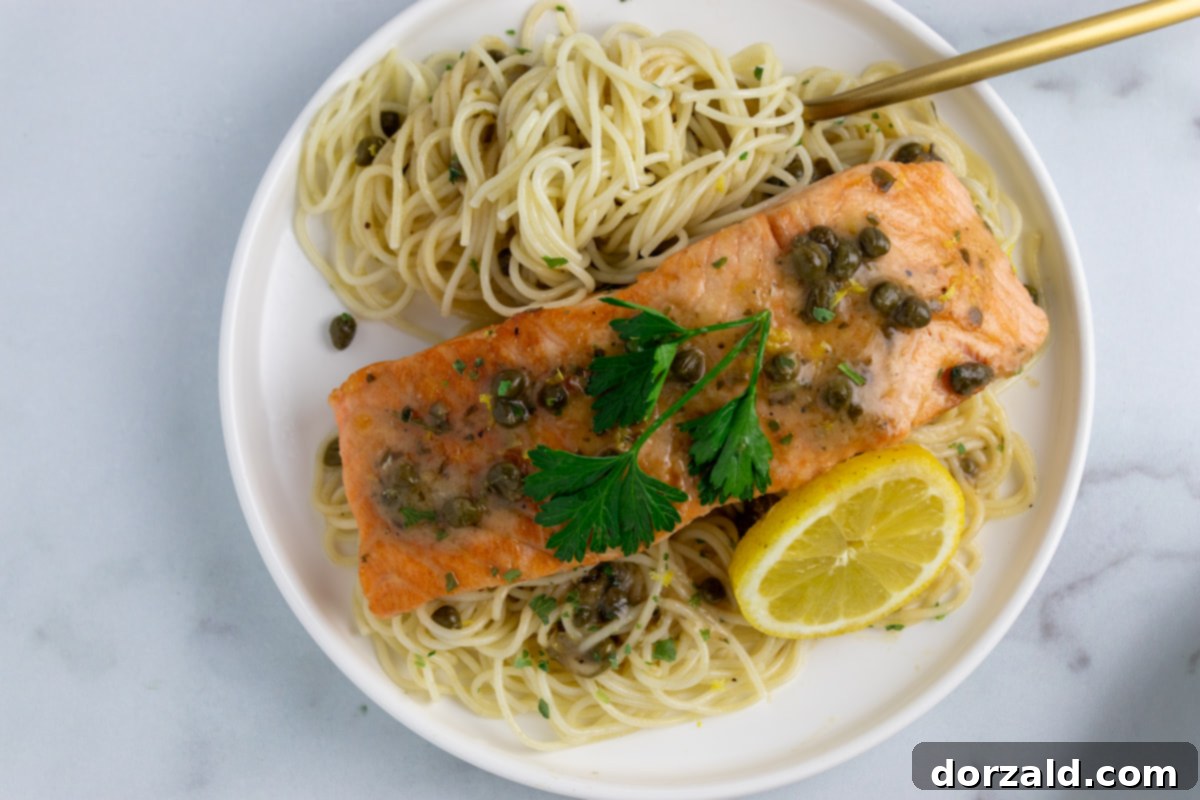
Exquisite Salmon Piccata Pasta: Your Go-To Dairy-Free & Gluten-Free Weeknight Meal
Are you searching for an exciting and flavorful way to transform your salmon dinners? Look no further than this incredible Salmon Piccata Pasta recipe! This dish offers a sophisticated twist on traditional salmon preparations, marrying the delicate flakes of fresh salmon with a vibrant, tangy, and utterly delectable lemony, buttery, caper-infused sauce, all tossed with your favorite pasta. Forget lengthy cooking times; this restaurant-quality meal can be on your table in under 30 minutes, making it significantly faster to prepare than its chicken counterpart.
This unique salmon recipe is not only incredibly delicious but also thoughtfully crafted to be inclusive. It’s naturally dairy-free and can easily be made gluten-free, making it perfect for those with specific dietary needs or anyone following a pescetarian lifestyle. Even if you don’t need to avoid dairy or gluten, you’ll still fall in love with its rich flavors and ease of preparation. Get ready to elevate your weeknight dinner routine with a dish that’s both healthy and intensely satisfying.
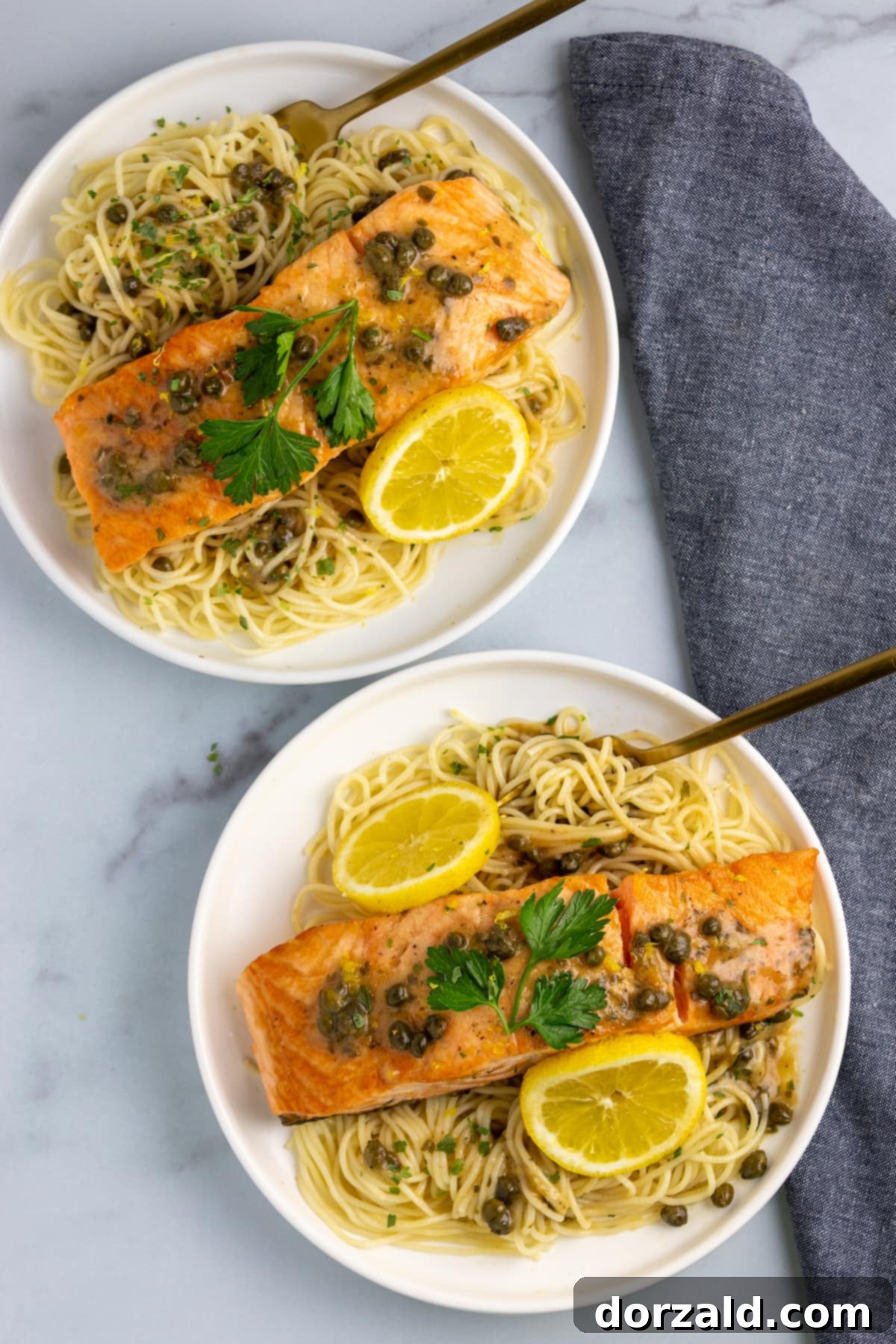
Why You’ll Adore This Lemon Salmon Piccata Pasta Recipe
This Salmon Piccata Pasta isn’t just another meal; it’s an experience. Here’s why it’s destined to become a staple in your recipe collection:
- The Unforgettable Sauce! This sauce is truly the heart and soul of the dish. It’s a luscious blend of bright lemon, savory capers, and rich, creamy butter (or dairy-free butter), creating a perfectly balanced flavor that coats every strand of pasta and piece of salmon. Even if you’re not typically a piccata enthusiast, the depth and zest of this sauce will win you over. My daughter, a true piccata connoisseur, gave this recipe her enthusiastic seal of approval, even assisting with taste-testing and food styling!
- Dietary-Friendly & Inclusive: One of the biggest advantages of this homemade salmon piccata is its accessibility. If you navigate dairy allergies, lactose intolerance, or gluten sensitivity, enjoying classic piccata at a restaurant can be a challenge. This recipe empowers you to create an equally (if not more!) delicious version at home, allowing you to savor every bite without any concerns about allergic reactions or digestive discomfort. It’s truly a dish everyone can enjoy.
- Lightning Fast Preparation: In today’s busy world, a quick yet impressive meal is invaluable. This salmon piccata pasta comes together in less than 30 minutes from start to finish. The salmon cooks quickly, and the sauce is a breeze, making it an ideal choice for a busy weeknight when you crave something special without the fuss.
- Effortlessly Simple Ingredients: You don’t need exotic items for this gourmet-tasting dish. Made with a handful of common pantry staples and fresh ingredients, this recipe proves that extraordinary flavor doesn’t require an extensive shopping list or complex culinary techniques.
- Even Better as Leftovers: While it’s hard to imagine having any leftovers, should you be so lucky, this dish reheats beautifully. The flavors meld and deepen overnight, making it just as delightful—if not more so—the next day. It’s perfect for a quick lunch or another effortless dinner.
- Healthy & Wholesome: Salmon is a powerhouse of nutrition, rich in omega-3 fatty acids, protein, and essential vitamins. Paired with fresh lemon, capers, and pasta, this meal offers a balanced and nourishing option that supports a healthy lifestyle without compromising on taste.
- Restaurant Quality at Home: Impress your family and friends with a dish that tastes like it came from a high-end Italian restaurant, all from the comfort of your own kitchen. The vibrant flavors and elegant presentation make it suitable for both casual weeknight dinners and special occasions.

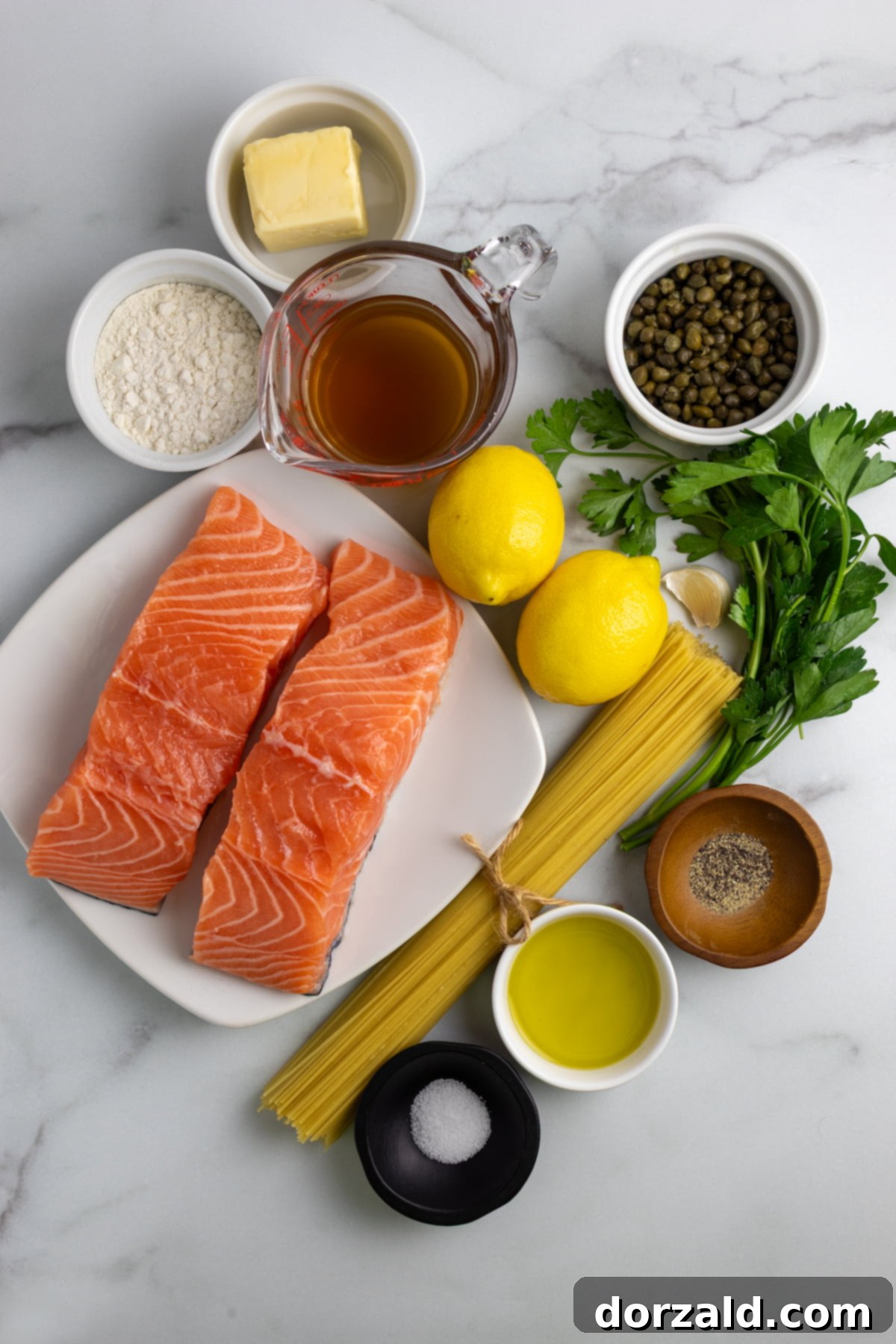
Essential Ingredients & Smart Substitutions for Salmon Piccata Pasta:
Crafting the perfect Salmon Piccata Pasta relies on fresh, quality ingredients. Here’s a detailed look at what you’ll need and how to make smart substitutions:
- Salmon: You’ll need about 1 pound of salmon fillets. For the best results, opt for 2 thick, center-cut pieces of salmon, as they cook more evenly and retain moisture better than thinner tail pieces. Salmon can be cooked with or without the skin; if you leave the skin on, it might require a slightly longer cooking time to achieve crispiness. I enjoy preparing it both ways. This recipe yields two generous servings, which can easily stretch to four servings with a side dish or provide delicious leftovers for two.
- Pasta: Angel hair or thin spaghetti are ideal choices for this dish because their delicate strands beautifully absorb the light, buttery sauce. However, feel free to use your favorite pasta shape! If you have celiac disease, gluten intolerance, or sensitivity, simply use a high-quality gluten-free pasta.
- Pasta Water: This is a secret weapon for creating a silky, emulsified sauce. Always remember to save some of your starchy pasta water before draining! It helps to bind the sauce and thin it to the perfect consistency.
- Butter/Dairy-Free Butter: The velvety, rich, and lemony sauce is fundamentally buttery. For a dairy-free version, a high-quality butter substitute is crucial. I highly recommend Earth Balance buttery sticks for their excellent flavor and texture. If dairy isn’t an issue for you, real unsalted butter works perfectly. I do not recommend substituting with oil, as it won’t provide the same richness and flavor depth.
- Olive Oil: You’ll use olive oil to sear the salmon, ensuring a beautiful golden-brown crust. Extra virgin olive oil adds a lovely flavor, but any good quality olive oil will suffice. Avocado oil is another excellent alternative for high-heat cooking.
- Vegetable Broth: This recipe calls for vegetable broth for two main reasons: 1) It provides a more nuanced depth of flavor that, in my experience, enhances the lemon-caper sauce more effectively than chicken broth, and 2) It keeps the dish entirely pescetarian, appealing to those who combine a vegetarian diet with seafood. That said, if chicken broth is what you have on hand or prefer, it can certainly be used.
- Flour: You’ll need about 1-2 tablespoons of all-purpose flour or gluten-free flour to lightly dust the salmon fillets, which helps create a lovely crust and thickens the sauce slightly. An additional tablespoon will be mixed with the vegetable broth to create a “slurry” that thickens the piccata sauce to perfection.
- Lemons: Fresh lemons are non-negotiable for authentic piccata flavor! You’ll need two lemons: one for vibrant lemon zest and fresh lemon juice, which are essential for the sauce’s bright, tangy profile. The second lemon is for elegant slices to use as a garnish, adding both visual appeal and an extra burst of freshness. While bottled juice can be substituted in a pinch, fresh is always superior for taste.
- Capers: Jarred non-pareil capers are a cornerstone of any piccata dish. These small, briny flower buds add a distinct tangy and salty punch that is irreplaceable. Ensure they are drained before use.
- Garlic: One minced clove of fresh garlic adds a foundational aromatic note to the sauce. If you’re short on time or don’t have fresh garlic, a teaspoon of jarred minced garlic can be used as a convenient substitute.
- Herbs and Spices: Fresh or dried parsley is used for its fresh, herbaceous notes. Salt and black pepper are essential for seasoning both the salmon and the sauce, bringing all the flavors into harmony.
Essential Equipment for Your Salmon Piccata Pasta
You won’t need a professional kitchen setup to create this impressive meal. Here’s the basic equipment that will make your cooking process smooth and enjoyable:
- Large Skillet: A large, heavy-bottomed skillet (cast iron or stainless steel works well) is essential for searing the salmon perfectly and then building your delicious piccata sauce. Its wide surface allows for even cooking and easy sauce whisking.
- Spatula: A sturdy spatula is needed for carefully flipping the delicate salmon fillets without breaking them.
- Whisk: A good whisk is key for creating a smooth, lump-free sauce, especially when incorporating the flour slurry and ensuring all ingredients are well combined.
- Pot: You’ll need a medium to large pot with a lid for boiling the pasta to al dente perfection.
- Colander: A colander is necessary for draining your cooked pasta, and remember to use it to catch that precious pasta water!
- Citrus Zester/Grater: While not strictly essential if using bottled lemon zest (though fresh is highly recommended), a zester makes quick work of getting fine lemon zest.
- Citrus Juicer: A hand-held juicer or reamer makes extracting fresh lemon juice much easier and more efficient.
Step-by-Step Instructions: Mastering Salmon Piccata Pasta
Follow these detailed steps to create a beautiful and flavorful Salmon Piccata Pasta dish that rivals any restaurant offering. For a printable, more concise recipe card with precise measurements, please refer to the end of this post.

Phase 1: Prepare the Salmon
To begin, grab a shallow bowl and combine 2 tablespoons of all-purpose or gluten-free flour with a generous pinch of salt and pepper. Take each salmon fillet, one at a time, and lightly dip one side into the seasoned flour, creating a thin, even “dusting.” If your salmon has skin, ensure you flour the non-skin side for the best crust. Set the floured salmon pieces aside on a plate while you prepare the other components.
Phase 2: Cook the Pasta
Bring a large pot of generously salted water to a rolling boil. Add your chosen pasta (angel hair or thin spaghetti works wonderfully) and cook according to the package directions until it’s perfectly al dente. This typically takes 8-10 minutes, but check your specific pasta. Before draining the pasta, crucially, reserve about 1/2 to 3/4 cup of the starchy pasta water. This will be invaluable for creating a luscious sauce. Drain the pasta using a colander and set it aside.
Phase 3: Sear the Salmon to Perfection
Heat 2 tablespoons of olive oil in a large skillet over medium-high heat. You’ll know it’s ready when the oil begins to shimmer lightly. Carefully place the floured salmon fillets into the hot skillet, floured side down first. Sear the salmon undisturbed for 2 1/2 to 3 minutes. This allows the floured side to develop a beautiful, slightly crispy, golden-brown crust. With a spatula, gently flip the salmon and cook on the other side for another 2-4 minutes. Adjust the cooking time based on the thickness of your fillets and whether they have skin (skin-on salmon takes slightly longer). Cooked salmon should reach an internal temperature of 145°F (63°C) and flake easily with a fork. Once cooked, transfer the salmon to a clean plate, cover it loosely with foil to keep warm, and allow it to rest. This resting period helps the salmon retain its moisture.
PRO TIP: It’s better to slightly undercook the salmon at this stage, as it will continue cooking while it rests and will be briefly returned to the sauce later. You can always cook it a little more, but you can’t undo overcooked, dry salmon.
Phase 4: Craft the Lemony Piccata Sauce

Using the same skillet (don’t clean it – those browned bits add flavor!), deglaze the pan by pouring in half of your fresh lemon juice (about 1 tablespoon). Use your spatula to scrape up any flavorful browned bits from the bottom of the pan. Next, add 1 tablespoon of butter or dairy-free butter and sauté the minced garlic over medium-high heat for 1-2 minutes until it becomes fragrant. Be careful not to burn it.
Reduce the heat to medium. Add the remaining butter (3 tablespoons), the rest of the lemon juice (1 tablespoon), the drained capers (3 tablespoons), the lemon zest (1 teaspoon), chopped parsley (1 tablespoon), and the measured salt and black pepper (1/4 teaspoon each). Stir gently until the butter melts and all ingredients are combined.
In a separate measuring cup or mug, whisk together 1 tablespoon of flour (all-purpose or gluten-free) with your 3/4 cup of vegetable broth until smooth, creating a “broth slurry.” Slowly pour this slurry into the skillet with your sauce, whisking continuously to ensure it blends seamlessly and avoids lumps. Add 2 tablespoons of the reserved pasta water and whisk again. Turn the heat down to low and let the sauce gently simmer for 2-3 minutes, stirring frequently, until it thickens to a consistency similar to a thin gravy. If it appears too thick, you can add another tablespoon of pasta water to achieve your desired consistency.
Phase 5: Finish and Plate the Dish
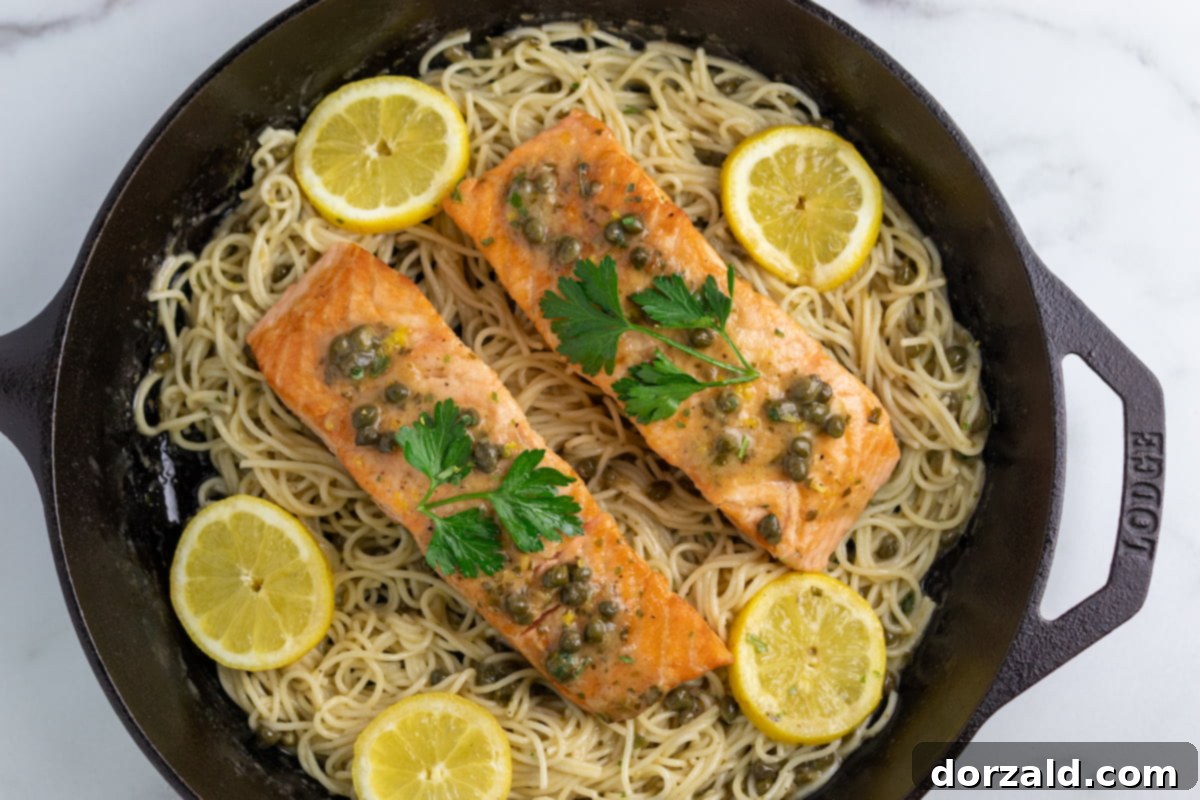
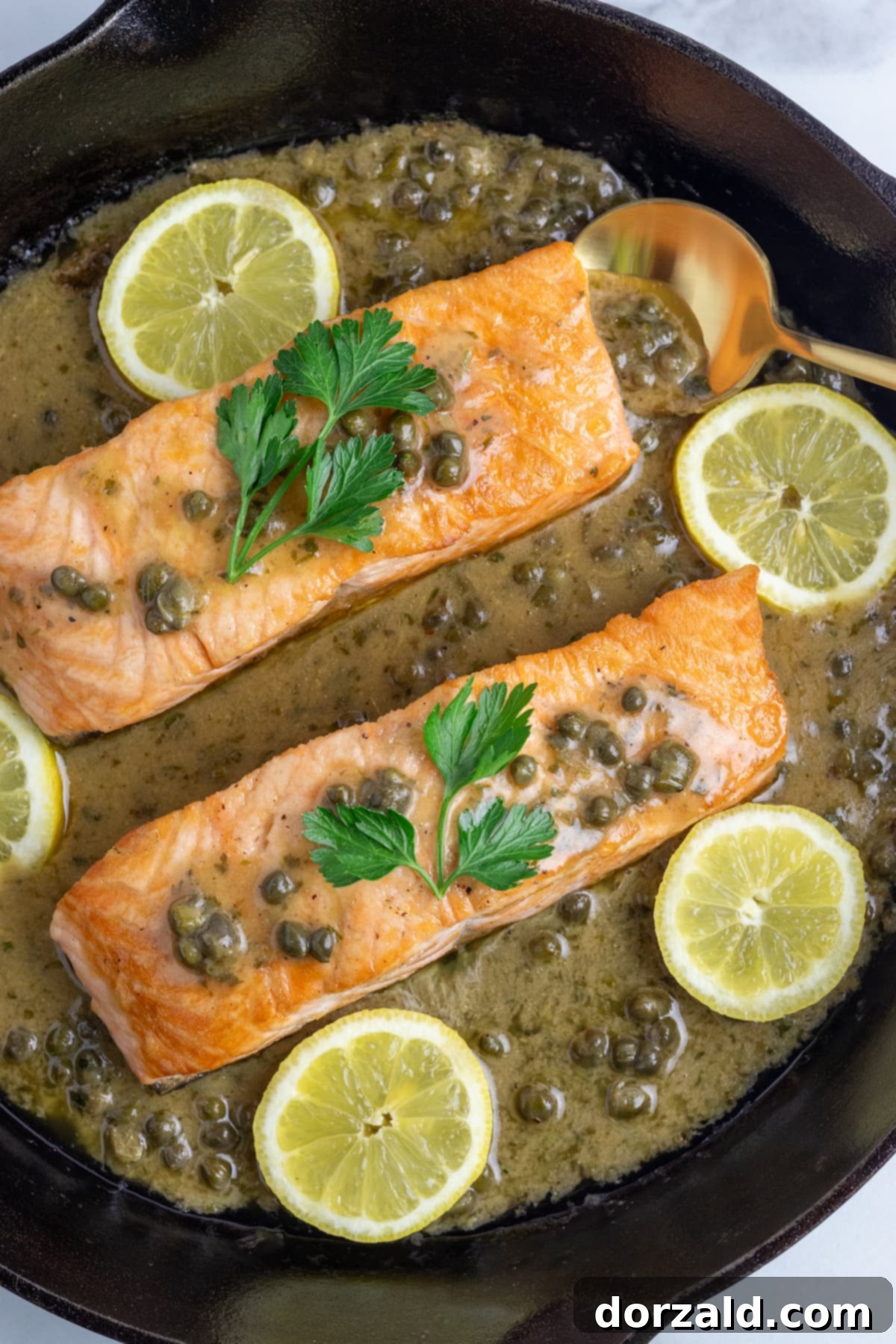
Carefully return the rested, cooked salmon fillets to the skillet with the piccata sauce. Spoon some of the luscious sauce over the salmon. Allow it to cook for an additional 1-3 minutes, just enough to gently warm the salmon through and ensure it’s cooked to your preference. Now, for the final touch, add the elegant lemon slices for garnish.
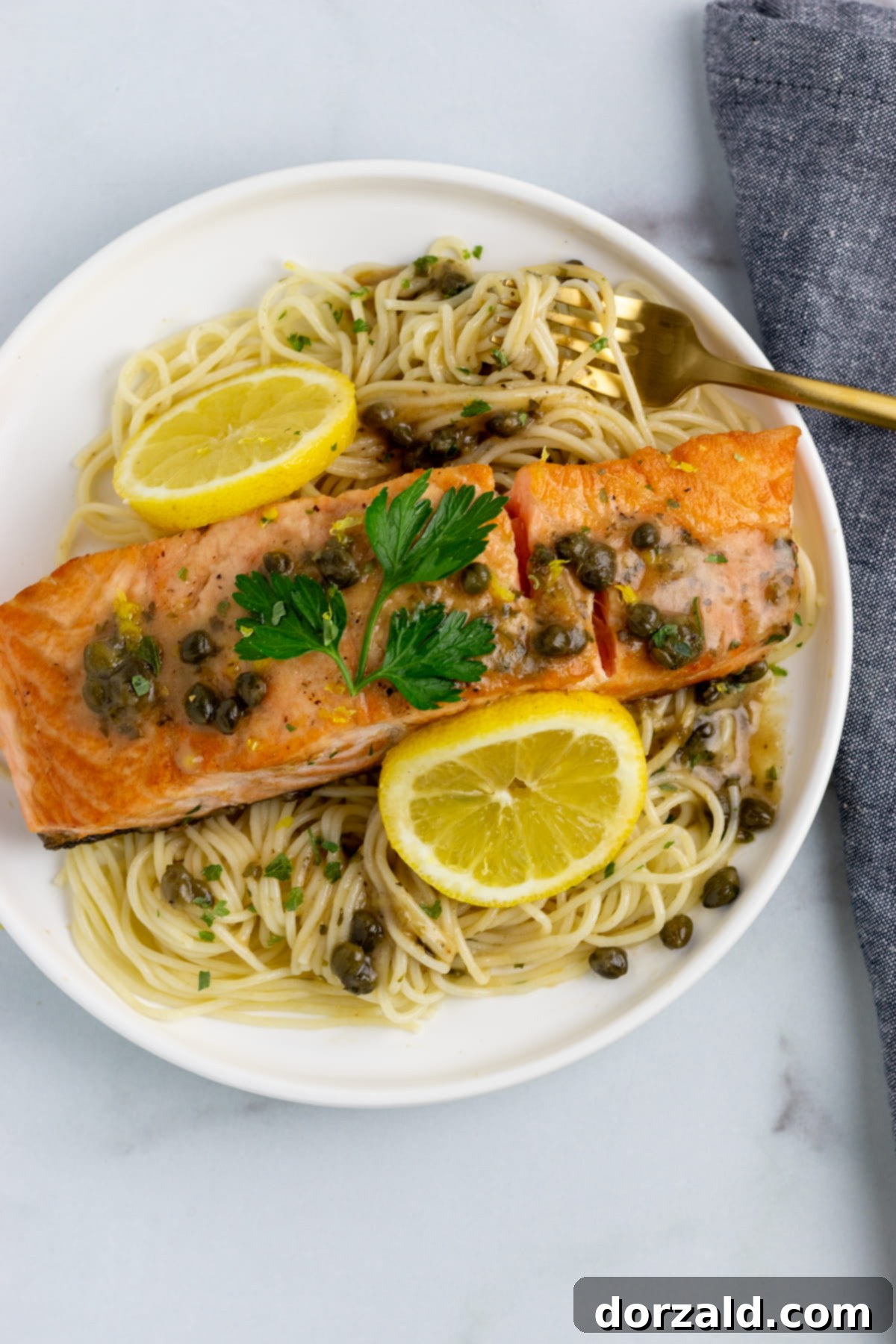
You have two delicious plating options:
- Option 1 (Classic Serve): Plate your cooked pasta, spoon a generous amount of the piccata sauce over it, then gently place a salmon fillet on top. Drizzle with a little more sauce and garnish with fresh parsley and lemon slices.
- Option 2 (Integrated Serve): For a more cohesive dish, carefully remove the salmon from the skillet once warmed. Add the drained pasta directly into the skillet with the sauce and toss it gently to ensure every strand is beautifully coated. Then, plate the pasta, top with the salmon, and garnish as desired.
Either way, you’re guaranteed a mouth-watering meal! Serve immediately and enjoy the delightful flavors of your homemade Salmon Piccata Pasta.
Frequently Asked Questions About Salmon Piccata Pasta
Here are some common questions about making this delightful Salmon Piccata Pasta:
Can I use chicken instead of salmon?
Absolutely! The piccata sauce works beautifully with chicken. For specific instructions on preparing chicken piccata, please refer to my dairy-free and gluten-free chicken piccata recipe.
Is this Salmon Piccata Pasta recipe pescetarian?
Yes, it is! By using vegetable broth instead of chicken broth, this recipe ensures it adheres to a pescetarian diet, which includes fish and seafood but excludes other meats.
I want more sauce. Can I double the sauce recipe?
Of course, you can! If you love a generous amount of sauce or are serving a larger crowd, feel free to double the quantities for all the sauce ingredients. Just keep in mind that the nutrition information provided in the recipe card is based on the original recipe as written.
Can I make this recipe gluten-free? What about dairy-free and soy-free?
Yes to all three! To make it gluten-free, simply use gluten-free pasta and gluten-free all-purpose flour for dusting the salmon and thickening the sauce. For dairy-free, ensure you use a high-quality dairy-free butter substitute (like Earth Balance buttery sticks). If you also need it to be soy-free, check the labels on your dairy-free butter, as some contain soy. Earth Balance offers specific vegan and soy-free buttery stick options that work perfectly.
Can I leave out the pasta and just make salmon piccata?
Certainly! If you prefer to enjoy salmon piccata without pasta, it makes a fantastic main course on its own. It pairs wonderfully with fluffy rice, creamy dairy-free mashed potatoes, steamed vegetables, or a crisp side salad. The sauce is versatile enough to complement many different accompaniments.
Shouldn’t there be white wine in this recipe?
Traditional piccata often includes white wine. However, to ensure this recipe is fully dairy-free and gluten-free, I opted to exclude wine, as some white wines can contain trace amounts of dairy and/or gluten due to the fining process used to clarify them. If you prefer to use wine and don’t have dietary restrictions, you can substitute 1/4 cup of white wine for 1/4 cup of the vegetable broth, reducing the broth to 1/2 cup.
What can I serve with this salmon piccata pasta?
This flavorful dish pairs beautifully with a variety of sides. I highly recommend serving it with simple steamed broccoli, sautéed asparagus, vibrant green beans, a light mixed green salad, or roasted lemon potatoes for an extra citrusy kick. These options provide a nice balance to the rich, tangy sauce.
Can I prepare parts of this recipe ahead of time?
While this dish comes together quickly, you can certainly do some prep work in advance. You can measure out all your ingredients (mise en place), mince your garlic, and even zest and juice your lemons a day ahead. This will make the actual cooking process even faster and more seamless.
How should I store leftovers?
Store any leftover Salmon Piccata Pasta in an airtight container in the refrigerator for up to 2-3 days. Reheat gently on the stovetop over low heat, adding a splash of vegetable broth or water if the sauce has thickened too much.
Can I freeze Salmon Piccata Pasta?
Freezing this dish is generally not recommended. Cooked salmon can become dry and crumbly when frozen and reheated, and the pasta may become mushy. The sauce, however, might fare a bit better if frozen separately, but it’s best enjoyed fresh or from refrigeration within a few days.
Explore More Delicious Salmon Recipes
If you’ve enjoyed this Salmon Piccata Pasta and are looking for more ways to incorporate healthy and delicious salmon into your diet, check out these other fantastic recipes from my kitchen:
- Quick and Easy Salmon Patties
- Flavorful Salmon Tacos
- Simple Marinated Baked Salmon
- One Pan Pistachio Crusted Salmon
- Hearty Tomato Chorizo Salmon
Salmon Piccata Pasta
Kelly Kirkendoll
Pin Recipe
Equipment
- 1 large skillet
- 1 Citrus Zester
- 1 Citrus Juicer
- 1 Colander
- 1 Whisk
Ingredients
- 1 1b salmon (center filet pieces work better than tail pieces)
- 4 oz angel hair pasta or spaghetti (use gluten-free pasta if need to make this g-f)
- 2 Tbsp pasta water (save 2-3 Tbsp of your pasta water from cooking your pasta)
- 4 Tbsp dairy-free butter (if dairy isn’t an issue, you can use real butter)
- 2 Tbsp olive oil
- 3/4 cup vegetable broth
- 3 Tbsp flour (gluten-free if making this g-f)
- 2 lemons, for 2 Tbsp lemon juice and 1 tsp zest (you’ll need 1 for fresh lemon zest + lemon juice; second lemon for garnish slices)
- 3 Tbsp capers (jarred, drained)
- 1 clove garlic
- 1 1/2 Tbsp chopped parsely (1 Tbsp for sauce; 1/2 Tbsp for garnishing; use fresh or dried)
- 1/4 tsp salt (for the sauce)
- 1/4 tsp black pepper (for the sauce)
- salt and pepper (a pinch or little shake of each to flour coating + salt and pepper to taste when finished making the sauce)
Instructions
COOK THE PASTA
- Bring a pot of salted water to a boil.
- Cook your pasta according to the package’s instructions.
- SAVE SOME OF THE PASTA WATER. You’ll need 2 Tbsp (maybe 3).
PAN-COOK THE SALMON
- Put 2 Tbsp of flour in a shallow bowl with a pinch of salt and pepper. One at a time, put each salmon piece in the bowl and lightly coat (“dust”) one side with the flour. If using salmon with skin on, flour the side without skin. Set the salmon filets aside.
- Get 2 Tbsp olive oil hot in a large skillet over medium-high heat.
- Once the oil shimmers, add the salmon to the pan, floured side down. Sear the salmon for 2 1/2 to 3 minutes without moving it, to get the floured side a bit crispy and browned. Carefully flip and cook on the other side another 2-4 minutes, depending on thickness and whether the other side has skin on it or not. It takes a little longer to cook with skin on. Pan-cooked salmon is done when it’s 145 degrees F (63 degrees C). It should flake easily with a fork. Set the cooked fish on a plate to rest and cover to keep warm.
MAKE THE SAUCE
- Deglaze the pan with half of your lemon juice (1 Tbsp) and scrape any salmon bits left off the bottom (they add nice flavor to your sauce!).
- Add 1 Tbsp of butter/dairy-free butter and saute the minced garlic on medium-high heat for 1-2 minutes (until frangrant).
- Turn down to medium heat. Add the remaining “butter” (3 Tbsp), remaining lemon juice, (1Tbsp), capers (3 Tbsp), lemon zest (1 tsp), chopped parsely (1 Tbsp) and salt and black pepper (1/4 tsp each). Stir and let the butter melt.
- Put 1 Tbsp of flour or gluten-free flour in a measuring cup or mug with your 3/4 cup of vegetable broth and whisk to combine, creating a “broth slurry.”
- Add the broth slurry to the sauce in your skillet, and slowly whisk it in to combine well. Add 2 Tbsp of pasta water and whisk in.
- Turn the heat down to low and simmer for 2-3 minutes to allow your piccata sauce to thicken, stirring frequently. Optional – you can add 1 more Tbsp of pasta water at this point if the sauce seems too thick. It should be like a thin gravy …
FINISH and PLATE
- Add the cooked salmon back to the skillet, add a little of the sauce on top and cook for 1-3 more minutes, depending on the salmon’s temperature and if it needs cooked a little longer (or not).
- At this point, you have 2 options: Option 1 – Plate your pasta, spoon sauce over it, then place the salmon on top with a little sauce and garnishes on top. OR Option 2 – remove the salmon again, put the pasta in the skillet and stir it in to coat the pasta … then plate and top with your salmon and garnishes. You can’t go wrong with either.
Notes
Nutrition
We hope this detailed guide inspires you to create this sensational Salmon Piccata Pasta in your own kitchen. It’s truly a dish that combines elegance with ease, proving that healthy, delicious, and diet-friendly meals can also be incredibly quick to prepare. Enjoy the vibrant flavors and the satisfaction of a homemade gourmet meal!