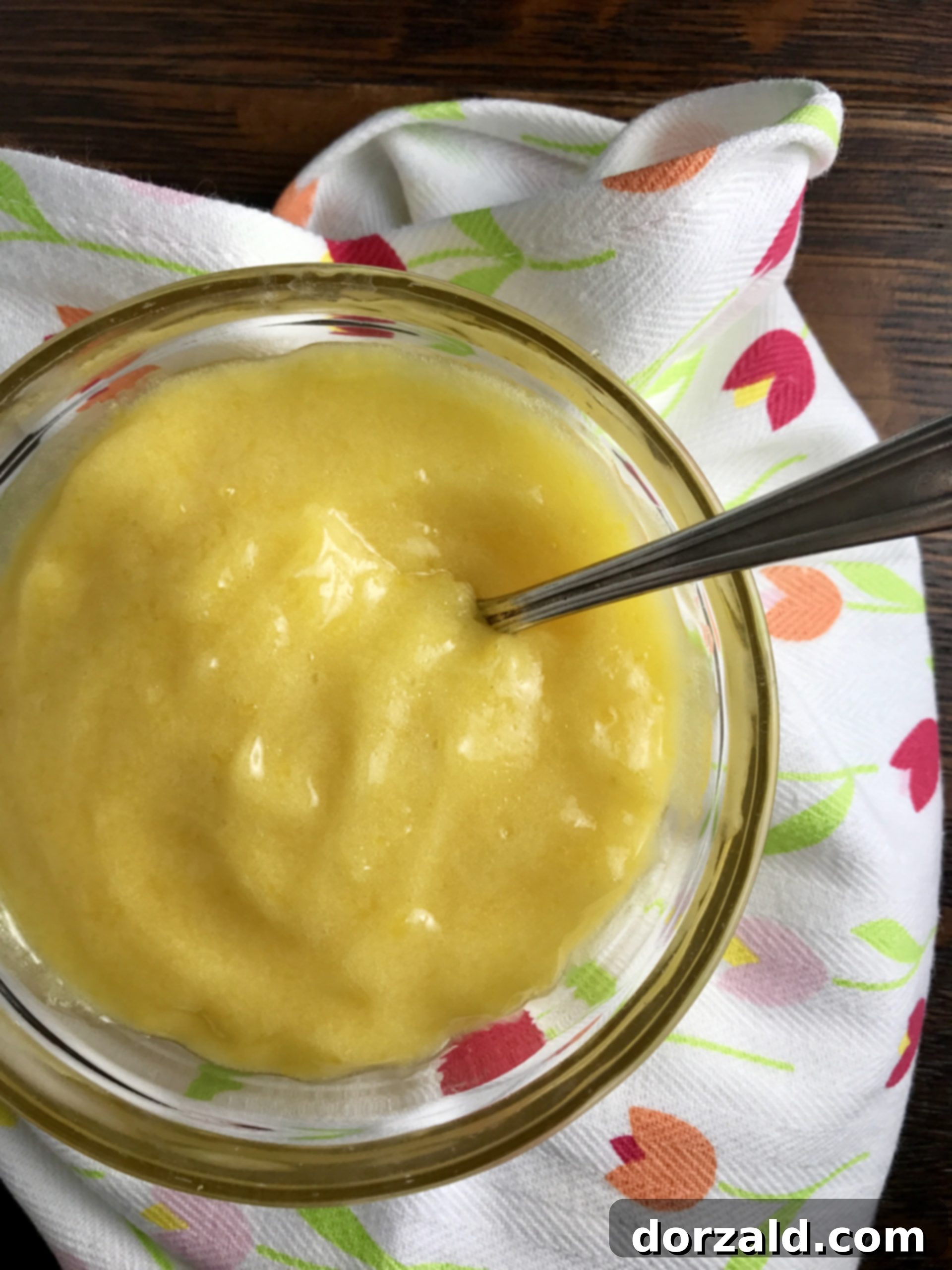
Exquisite Dairy-Free Lemon Curd: Your Ultimate Guide to a Zesty, Creamy Delight
There’s a unique charm and unparalleled flavor that comes with homemade lemon curd. For those navigating dairy allergies or lactose intolerance, discovering the perfect homemade Dairy-Free Lemon Curd isn’t just a culinary achievement—it’s a joyous revelation! This recipe isn’t merely a substitute; it’s a vibrant, tangy, and utterly luscious spread that stands proudly on its own, promising to become a cherished staple in your kitchen. Prepare to be enchanted by its silky texture and bright, sun-kissed flavor that will make you forget it’s dairy-free.
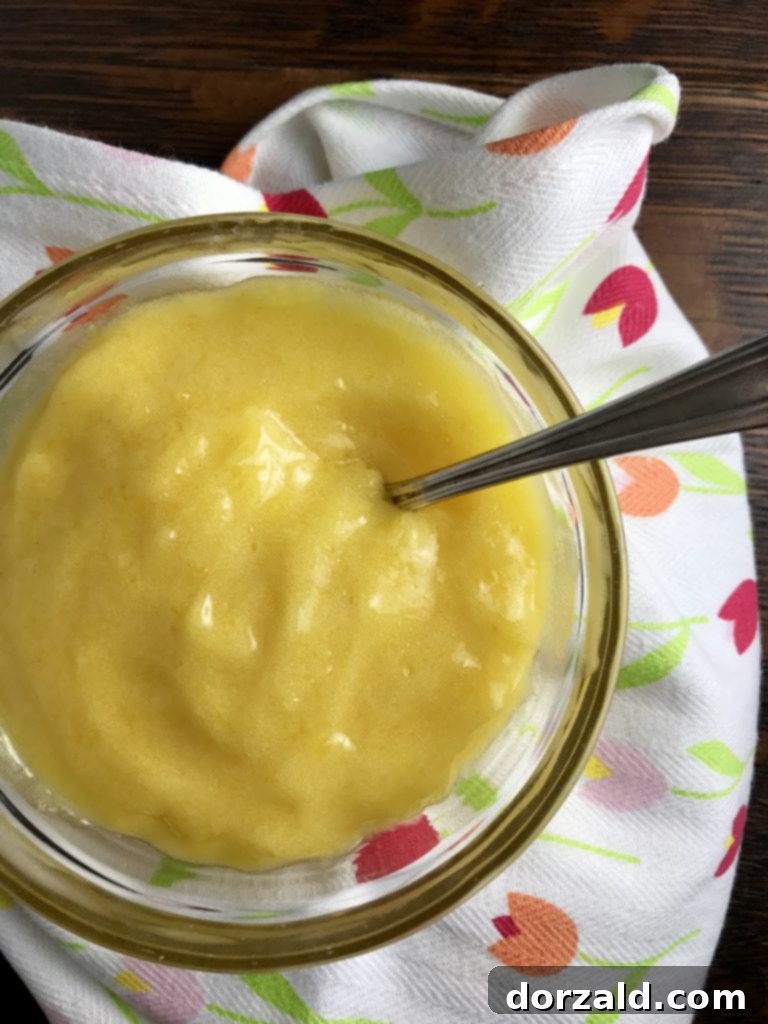
Why This Dairy-Free Lemon Curd Will Become Your New Favorite
This isn’t just another recipe; it’s an invitation to experience the sheer joy of a classic dessert component, reimagined for everyone. Here’s why you’ll fall head over heels for this dairy-free lemon curd:
- Unbelievably Delicious & Irresistible: Prepare for a flavor explosion! This lemony delight is a symphony of tastes and textures—beautifully bright, light yet rich, wonderfully tangy, and luxuriously smooth and creamy. It’s so exquisitely good, you’ll find yourself reaching for just one more spoonful directly from the bowl. Its vibrant zestiness perfectly balances the sweetness, creating a truly unforgettable experience.
- Surprisingly Simple to Make (An EASY Lemon Curd Recipe!): Many people shy away from making lemon curd from scratch, assuming it’s a complicated endeavor reserved for professional chefs. I used to be one of them, always buying jarred versions. But I discovered the truth: homemade lemon curd is incredibly straightforward, requiring only a few basic ingredients and minimal hands-on time. The result? A flavor that far surpasses any store-bought variety, tasting infinitely fresher and more authentic. You’ll wonder why you didn’t try it sooner!
- Naturally Gluten-Free for Everyone to Enjoy: In addition to being completely dairy-free, this recipe is also naturally gluten-free. This makes it an ideal choice for households with multiple dietary restrictions, ensuring that everyone can indulge in this delightful treat without compromise. It’s a true win-win for deliciousness and dietary inclusivity.
- Freshness You Can Taste & Cost Savings You’ll Appreciate: Crafting your own lemon curd means you control every ingredient, ensuring no unwanted preservatives or artificial flavors. The difference in taste between homemade and jarred curd is profound—the fresh lemon notes truly sing! Plus, making it yourself is typically far more economical than purchasing specialty dairy-free curds from the store. You get superior flavor, guaranteed dairy-free status, and save money all at once.
- Versatile Beyond Your Wildest Dreams: While we’ll dive deeper into serving suggestions, know that this lemon curd isn’t just for toast. Its incredible versatility makes it a perfect companion for countless desserts, breakfasts, and even some savory applications (if you’re feeling adventurous!).
Essential Ingredient Notes for Perfect Lemon Curd
Achieving the perfect dairy-free lemon curd starts with understanding your ingredients. Here’s a deeper look into what you’ll need and why each component is crucial:
- Lemons (Fresh is Non-Negotiable!): The star of the show! For the most vibrant and authentic lemon flavor, fresh lemons are absolutely essential. You’ll need approximately 3 medium to large lemons to yield both the required lemon juice and lemon zest. While bottled lemon juice or dried zest can be used in a pinch, be warned: the depth and brightness of flavor will not compare to that of fresh ingredients. Choose firm, heavy lemons with smooth, bright yellow skins for optimal juicing and zesting. Organic lemons are often preferred, especially when using the zest, to avoid pesticides.
- Egg Yolks (For Richness and Color): This recipe calls for 6 egg yolks. Some lemon curd recipes incorporate whole eggs or a mix of yolks and whites, but using only egg yolks results in a brighter yellow curd with a richer, smoother, and more luxurious texture. The yolks provide the emulsification needed for that classic creamy consistency and contribute significantly to the curd’s appealing golden hue. Organic, free-range eggs often yield more intensely colored yolks, enhancing the curd’s visual appeal. Save those egg whites for another recipe, like meringues or an omelet!
- Dairy-Free Butter (The Key to Creaminess): This is where the magic happens for our dairy-free version. Use a high-quality dairy-free or vegan butter stick. Brands like Earth Balance buttery sticks are excellent choices, as they mimic the flavor and texture of traditional butter very well, contributing to the curd’s smooth finish and rich mouthfeel. Avoid tubs of soft dairy-free spread, as they often contain more water and can affect the consistency of the curd. If you don’t have dairy restrictions, feel free to use regular unsalted butter instead.
- Granulated Sugar (Sweetness and Structure): You’ll need one cup of granulated sugar. Sugar not only provides sweetness to balance the tartness of the lemons but also plays a role in the curd’s structure and preservation. While any regular granulated sugar will work, many prefer to use organic granulated sugar, especially if aiming for a fully organic product. The sugar dissolves during cooking, contributing to the curd’s smooth texture.
Step-by-Step Guide: How to Master This Dairy-Free Lemon Curd Recipe
Making homemade lemon curd is a gratifying experience, and with these detailed steps, you’ll achieve perfection every time. Patience and continuous whisking are your best friends here!
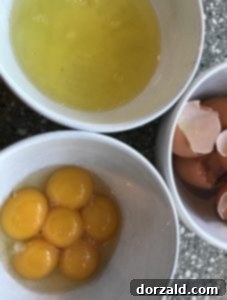
STEP 1: Prepare Your Egg Yolks. Begin by carefully separating the egg yolks from the whites. For this recipe, you will use only the yolks from 6 large eggs. A common technique is to crack an egg into your clean hand and let the white slip through your fingers into a bowl, retaining the yolk in your palm. Repeat for all 6 eggs. Place the separated yolks in a small bowl and set aside. Don’t discard the egg whites! They can be stored in an airtight container in the refrigerator for several days and used for meringues, pavlova, or a healthy egg white omelette.
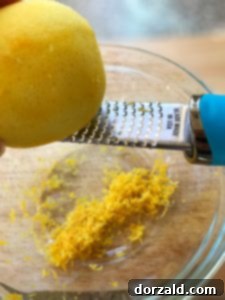
STEP 2: Zest Your Lemons with Precision. Before cutting your lemons, it’s crucial to zest them. You’ll need 2 1/2 teaspoons of finely grated lemon zest. Use a microplane zester or the smallest holes on a box grater for this task. The goal is to remove only the bright yellow outer layer (the zest) which contains all the aromatic oils. Be careful to avoid the white pith underneath the zest, as it is quite bitter and can impart an unpleasant flavor to your curd. If you’re rushing, it’s easy to cut the lemons before zesting – trust me, I’ve made that mistake more times than I can count! Always zest first, then juice.
PRO TIP: If you’re new to zesting citrus, don’t let it intimidate you. It’s remarkably easy, especially with the right tool. A microplane zester is a game-changer for effortlessly removing fine zest without hitting the bitter pith. While a regular grater can work, it requires a bit more effort and care. Investing in a good microplane zester early on would have saved me a lot of hassle in my culinary journey. Click here to see the microplane zester I personally use (it’s the exact same model and color!). Please note: if you purchase through this link, you pay the same price, and I receive a small commission, which helps support the continuous creation of content for my blog. Your support is greatly appreciated!
STEP 3: Extract the Fresh Lemon Juice. Once zested, cut your lemons in half and juice them. You will need exactly 1/2 cup of fresh lemon juice. To maximize juice extraction, you can roll the lemons firmly on a countertop before cutting, or microwave them for 10-20 seconds. Strain the juice through a fine-mesh sieve to remove any seeds or pulp, ensuring a perfectly smooth curd. If you find yourself a little short of the 1/2 cup mark, you can top it off with a small amount of water or, as a last resort, bottled lemon juice, though fresh is always best.
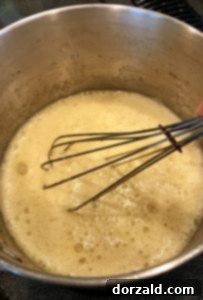
STEP 4: Combine and Whisk on the Stove. In a medium saucepan, combine the prepared egg yolks, granulated sugar, fresh lemon juice, and lemon zest. Whisk these ingredients together thoroughly until well combined. Place the saucepan over medium to medium-high heat. Now, the key is to whisk continuously. This constant motion prevents the egg yolks from scrambling and ensures even cooking and thickening. Keep whisking until the mixture comes to a gentle boil, with small bubbles breaking the surface.
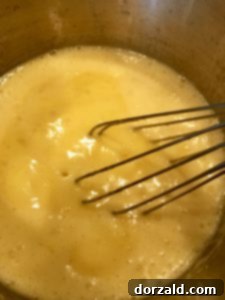
STEP 5: Thicken to Perfection. As soon as the mixture reaches a boil, immediately reduce the heat to low. Continue to whisk continuously and patiently. The curd will gradually begin to thicken. You’ll notice it changing to a brighter, more opaque yellow color. A good indicator of readiness is when the curd is thick enough to coat the back of a spoon, and when you run your finger across the spoon, it leaves a clean line. This process usually takes about 5-8 minutes after reducing the heat. Be careful not to let it boil vigorously on low heat, as this can still lead to scorching or curdling.
STEP 6: Incorporate Dairy-Free Butter and Cool. Once your lemon curd has reached the desired thickness, remove the saucepan from the heat. Add the dairy-free butter (cut into smaller pieces if it’s a stick) directly into the hot curd. Stir gently but continuously until the butter is completely melted and fully incorporated, lending a final touch of richness and silkiness to the curd. Do not cook after adding the butter. Once melted, set the curd aside to cool. As it cools, it will continue to thicken slightly. For best results, press a piece of plastic wrap directly onto the surface of the curd to prevent a skin from forming. Once completely cool, your exquisite dairy-free lemon curd is ready to store or enjoy immediately!
What Can You Make or Eat with This Dairy-Free Lemon Curd? Endless Possibilities!
The beauty of this dairy-free lemon curd lies in its incredible versatility. Once you’ve made a batch, you’ll find countless ways to incorporate its bright, tangy flavor into your daily meals and special occasion desserts. Oh, let me count the ways …
- Directly from the Spoon: Seriously, it’s that good! Don’t be surprised if you find yourself unable to resist spooning it straight from the bowl or jar. It’s a perfect little treat all on its own.
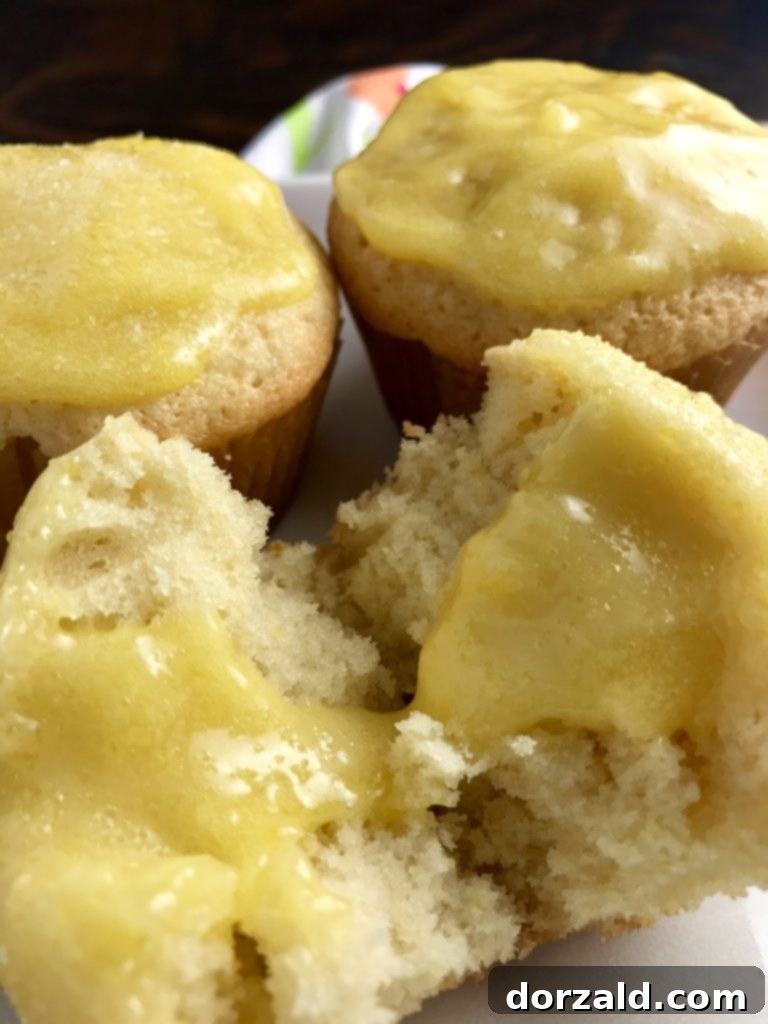
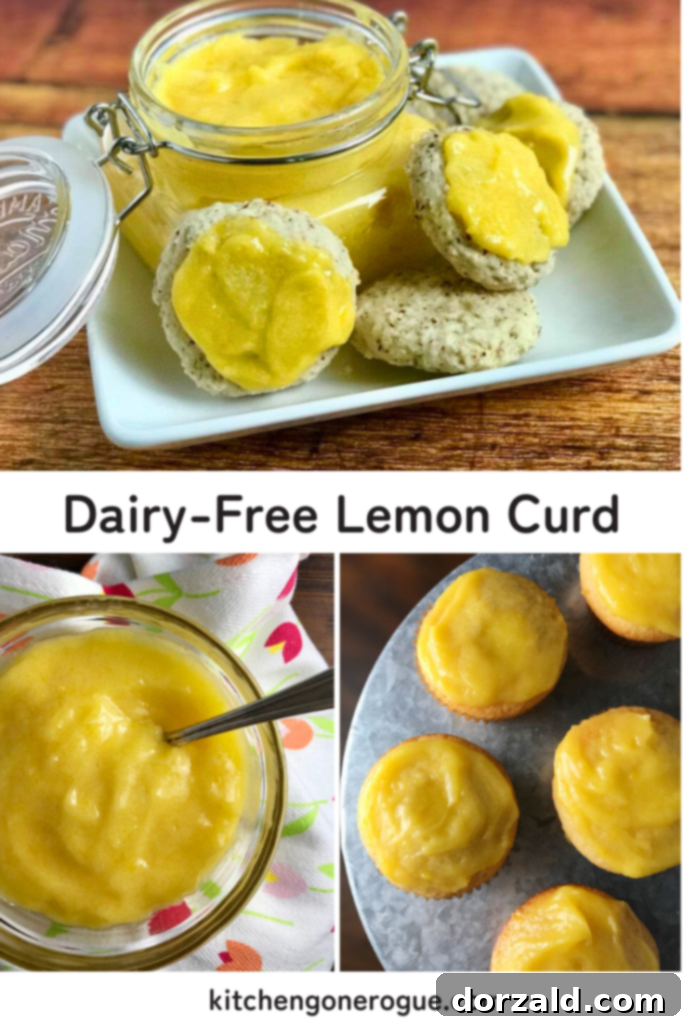
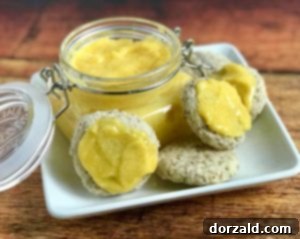
- A Classic Spread: Elevate your breakfast or snack time by spreading it generously on warm toast, fluffy muffins, delicate scones, classic English muffins, or even a simple bagel. It transforms ordinary baked goods into an extraordinary experience.
- Elegant Dessert Fillings: This lemon curd makes an exceptional filling for a variety of desserts. Fill your favorite vanilla or lemon cupcakes with the curd, creating a delightful burst of flavor with every bite. You can even use it as a light “icing” or swirl it into a cream cheese frosting for an extra tangy kick.
- Stunning Tarts and Pies: Create a show-stopping lemon tart by simply pouring the cooled curd into a pre-baked pie crust or tart shell. Top it with fresh berries, a dollop of dairy-free whipped cream, or a meringue for an absolutely breathtaking dessert. It’s equally fantastic as a filling for mini tarts or individual dessert cups.
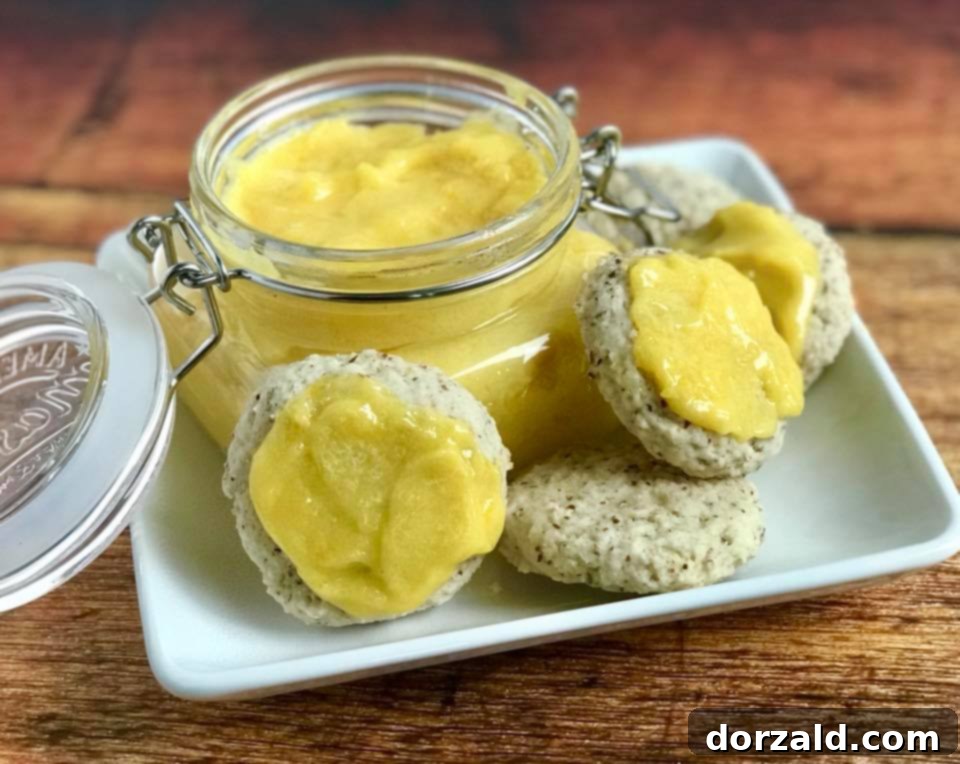
- Cookies and Bars: Spread it thinly over a shortbread base to make delicious lemon bars, or use it as a vibrant topping for your favorite sugar cookies. It’s also an ideal filling for thumbprint cookies, adding a zesty center to tender treats, much like my Dairy-Free, Gluten-Free Lemon Almond Wine Cookies.
- Yogurt and Parfaits: Layer it with dairy-free yogurt, granola, and fresh fruit for a delightful breakfast or a light, refreshing dessert parfait. The tang of the curd beautifully complements the creaminess of the yogurt.
- Pancake and Waffle Topping: Drizzle warm lemon curd over a stack of pancakes or waffles for a luxurious breakfast that feels incredibly indulgent.
- Trifles and Layer Cakes: Incorporate it into a trifle, alternating layers with dairy-free custard, cake pieces, and fresh fruit. It also makes a fantastic filling between layers of a sponge cake, adding moisture and a bright flavor profile.
Pin it/save it and try it!
Tips for Success & Troubleshooting Your Lemon Curd
While this recipe is straightforward, a few tips can ensure absolute perfection, and knowing how to troubleshoot common issues will boost your confidence.
- Continuous Whisking is Key: I cannot stress this enough. Continuous whisking, especially during the heating phase, is vital to prevent the eggs from scrambling and sticking to the bottom of the pot. It also ensures a smooth, lump-free texture.
- Monitor Heat Carefully: Medium to medium-high heat is good for bringing it to a boil quickly, but as soon as it boils, reduce it to low. Overheating can lead to a grainy or curdled texture.
- Identifying Readiness: The curd is ready when it thickens enough to coat the back of a spoon. When you draw your finger across the spoon, the line should remain clear. It will also appear shinier and a brighter yellow. If you have an instant-read thermometer, it should reach about 170-175°F (77-79°C).
- Dealing with Lumps/Graininess: If your curd develops any small lumps or appears slightly grainy, don’t despair! Pass it through a fine-mesh sieve immediately after removing it from the heat and before adding the butter. This will smooth it out beautifully.
- Preventing a Skin: To prevent a “skin” from forming on the surface as the curd cools, place a piece of plastic wrap directly onto the surface of the hot curd. This creates an airtight seal.
Storage and Shelf Life
Once cooled, your homemade dairy-free lemon curd needs to be stored properly to maintain its freshness and quality.
- Refrigeration: Transfer the cooled lemon curd to an airtight container or a clean glass jar. Store it in the refrigerator. It will keep well for up to 1-2 weeks. Always ensure the container is tightly sealed to prevent it from absorbing other odors from the fridge.
- Freezing: For longer storage, lemon curd freezes beautifully! Spoon it into freezer-safe containers, leaving a little headspace as it may expand slightly. Freeze for up to 2-3 months. To thaw, simply transfer it to the refrigerator overnight. Whisk it gently after thawing to restore its smooth consistency.
Frequently Asked Questions (FAQs) About Dairy-Free Lemon Curd
- Can I use bottled lemon juice?
- While fresh lemon juice is highly recommended for the best flavor, you can use bottled lemon juice in a pinch. Just be aware that the flavor profile might not be as bright and nuanced. Ensure it’s 100% lemon juice without added sugars or preservatives if possible.
- What can I do with the leftover egg whites?
- Don’t throw them away! Egg whites can be used for meringues, pavlova, egg white omelets, or added to smoothies for extra protein. They can be stored in an airtight container in the refrigerator for up to 3-4 days or frozen for up to several months.
- My lemon curd isn’t thickening. What went wrong?
- The most common reasons for curd not thickening are insufficient cooking time or not enough heat. Ensure you bring it to a boil and then continue whisking on low heat until it coats the back of a spoon. It’s a gradual process, so patience is key! Using a thermometer to reach 170-175°F (77-79°C) can also help.
- Is this recipe suitable for vegans?
- No, this recipe is dairy-free but not fully vegan because it uses egg yolks. For a truly vegan lemon curd, you would need to use egg substitutes and plant-based milks/thickeners.
- Can I make a larger batch?
- Yes, you can double or triple the recipe. Just be aware that a larger batch will require more cooking time and a larger saucepan. Ensure you whisk diligently to maintain consistency.
Dairy-Free Lemon Curd Recipe
Kelly Kirkendoll
Pin Recipe
Equipment
- 1 large pot or medium saucepan (at least 3-quart capacity)
- 1 Whisk
- 1 microplane citrus zester (or a fine grater)
- Fine-mesh sieve (optional, for extra smooth curd)
Ingredients
- 1/2 cup fresh squeezed lemon juice
- 6 large egg yolks
- 1 cup granulated sugar
- 2 1/2 tsp fresh lemon zest (from about 2-3 lemons)
- 1/2 cup dairy-free butter (use cold, unsalted dairy-free butter sticks, cut into pieces. If you don’t have a dairy allergy, you can use real unsalted butter)
Instructions
- Carefully separate the egg yolks from the egg whites. You will only be using the 6 egg yolks for this recipe. (Suggestion: Save the egg whites to make yourself a delicious omelette or meringue for later!)

- Wash 2-3 lemons (depending on their size) thoroughly and dry them with a paper towel. Using a microplane zester (or the smallest holes on a box grater), carefully zest the yellow outer rind of the lemons. Aim for 2 1/2 teaspoons of zest. Be very careful to avoid zesting the white pith, which is bitter and can spoil the flavor of your curd.
- After zesting, cut the lemons in half and juice them into a liquid measuring cup or bowl until you have exactly 1/2 cup of fresh lemon juice. Strain the juice to remove any seeds or pulp for a smoother curd. If you are slightly short, you can add a tiny amount of water or bottled lemon juice to reach 1/2 cup.
- In a medium saucepan, combine the prepared egg yolks, granulated sugar, fresh lemon juice, and lemon zest. Whisk these ingredients together continuously over medium to medium-high heat until the mixture comes to a full, gentle boil. Continuous whisking is crucial here to prevent the eggs from curdling.
- As soon as the mixture reaches a boil, immediately reduce the heat to low. Continue whisking constantly. The curd will gradually begin to thicken and turn a brighter yellow. It’s ready when it’s thick enough to coat the back of a spoon, and you can draw a clear line with your finger across the spoon (approximately 5-8 minutes).
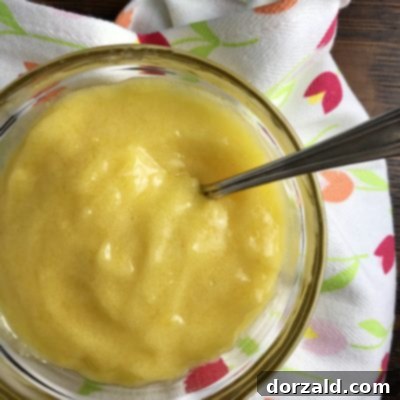
- Once thickened, turn off the burner. Add the dairy-free butter (cut into pieces) to the hot curd. Stir until the butter is completely melted and smoothly incorporated. If desired, you can strain the curd through a fine-mesh sieve at this point for an extra silky texture. Then, set the curd aside to cool completely. When it’s cooled, it’s ready to eat! Spoon it into your favorite jar or bowl and store it in your refrigerator. This fresh, creamy lemon curd is perfect for filling vanilla or lemon cupcakes, spreading on toast, or enjoying straight from the spoon.

Notes
Store dairy-free lemon curd in an airtight container in the refrigerator for up to 1-2 weeks. It can also be frozen for up to 2-3 months.
© Kitchen Gone Rogue. www.kitchengonerogue.com